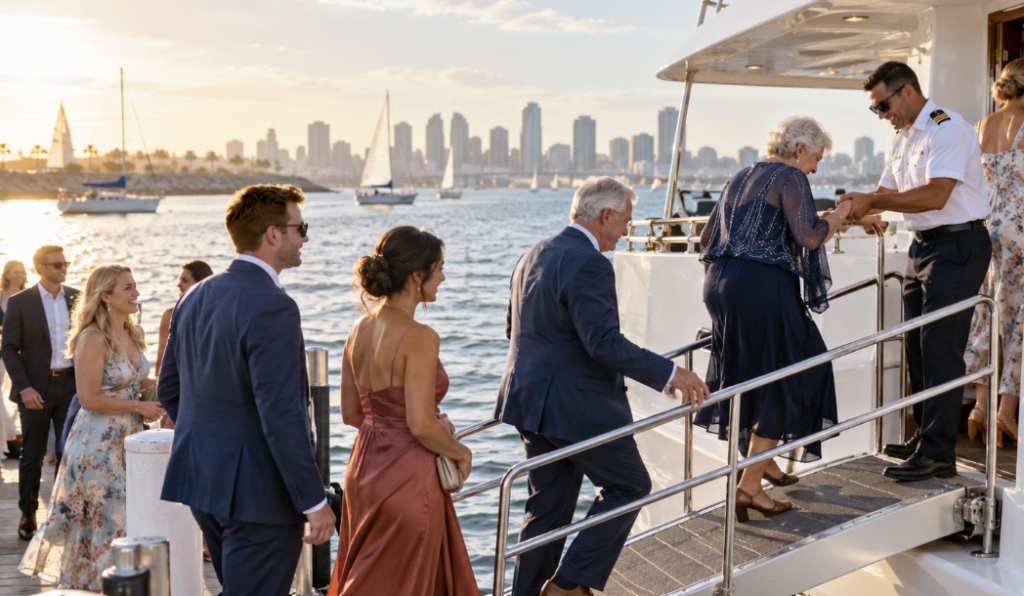
A wedding yacht rental in San Diego takes some planning that you won’t run into with a traditional venue. Vendors have to work around boarding times, guests need clear arrival instructions, décor has to fit the vessel, and every part of the day has to stay on schedule once the yacht leaves the dock.
At Mai Tai Charters, we already have a dedicated wedding yacht charter option for couples who want to celebrate on San Diego Bay. If you’re past the inspiration stage and starting to work through the actual logistics, these are the details worth sorting out early.
Start With the Yacht Before You Book the Rest
Your yacht affects almost every other wedding decision.
Guest count, seating, food service, entertainment, décor, photography, and boarding all depend on the vessel you choose. Before signing contracts with vendors, make sure you understand the yacht’s capacity, layout, charter length, pickup location, and any rules that affect outside vendors.
This matters even if you already have a general wedding plan. A florist who normally has several hours to build an installation at a hotel may have a much shorter setup window at a marina. A DJ may need to work within the yacht’s available space and power setup. Caterers need to know how and when they can bring food aboard.
Choose the vessel first, then give every vendor the same operating information.
For larger guest lists, it also makes sense to review our large passenger ship options before assuming a smaller yacht will work for the event.
Wedding Yacht Rental San Diego: Work Backward From Boarding Time
For a yacht wedding, departure time creates a hard point in the schedule.
Start there and build backward.
Your timeline should account for vendor arrival, setup, wedding party arrival, guest boarding, final headcounts, ceremony preparation, and any safety instructions required before departure.
A practical planning order looks like this:
- Confirm the charter start and end time.
- Confirm exactly when vendors may access the yacht.
- Give the wedding party an earlier arrival time than guests.
- Set a clear guest check-in window.
- Leave extra time for parking and walking to the marina.
- Decide what happens if a guest arrives after boarding closes.
Avoid building the schedule around the ceremony start alone. If guests think a 5:00 p.m. ceremony means they should arrive at 4:55, the entire event can start under pressure.
Tell guests when they need to be at the boarding location, not just when the ceremony begins.
Give Every Vendor Yacht-Specific Instructions
Don’t assume an experienced wedding vendor automatically knows how yacht events work.
Send vendors the yacht name, boarding location, access time, charter schedule, contact person, equipment limits, and setup expectations well before the wedding.
Your photographer may want to know where the best open deck areas are. A DJ needs to understand available space before arriving with equipment. Florists need realistic dimensions and setup times. Caterers need clear loading instructions.
Ask vendors to keep what they bring compact and organized. Space matters aboard a yacht, especially during setup.
It also helps to identify who removes vendor equipment after the charter. Anything brought aboard needs a plan for getting back off without slowing down guest departure or crew operations.
Confirm the Exact Boarding Location
This sounds basic, but it’s one of the easiest details to overlook.
Mai Tai Charters notes that different boats may pick up at different locations, so couples should confirm the exact boarding point for their vessel before sending invitations or final wedding information.
Give guests more than the marina name. Include the full address, parking instructions if available, what time to arrive, and the best contact number for day-of questions.
Out-of-town guests may also need extra time. Someone staying downtown might assume the yacht boards from the nearest waterfront area, while the actual departure point could be elsewhere.
Once you confirm your yacht, use the same location wording everywhere. Invitations, wedding websites, vendor timelines, shuttle instructions, and texts from the wedding party should all match.
Keep Décor Practical for a Moving Venue
A yacht already gives you a strong setting, so décor usually works best when it respects the available space.
Before ordering large pieces, confirm where décor may go and how it needs to be secured. Wind, narrow walkways, stairs, railings, and guest movement all affect what works aboard.
Ask about anything that requires installation or electricity before purchasing it. That includes arches, large floral structures, freestanding signs, candles, lighting, DJ equipment, and other decorative pieces.
Smaller arrangements often make setup easier and keep decks open for guests.
The same applies to personal items. Decide ahead of time where gifts, cards, purses, jackets, vendor cases, and ceremony materials will stay during the cruise.
Plan Food and Drinks Around the Actual Charter
Food service should fit the length and flow of the wedding.
A shorter evening reception may work differently from a longer event with a ceremony, cocktail time, dinner, and dancing. Think about when guests will eat, how food will move through the yacht, and whether seated dining or a more flexible service style makes sense for your group.
Mai Tai’s wedding page lists customizable options including catering and bar service, so those details should become part of the planning conversation early.
If you’re bringing in outside vendors, confirm what they can bring aboard and what equipment they need.
The same goes for the cake. Ask where it will be stored, when it should arrive, who will set it up, and when it will be served.
Handle the Marriage License Before the Wedding Week
If you’re having the legal ceremony aboard the yacht, make the marriage license part of your planning timeline.
According to the San Diego County Recorder/County Clerk, couples need a marriage license before the ceremony. A California marriage license remains valid for 90 days after issuance, and the ceremony must occur within that period. The county also requires an authorized officiant, and a public marriage license requires at least one witness.
That gives you some flexibility, but don’t leave the appointment until the last few days.
Handle the legal paperwork early enough that it doesn’t compete with final vendor calls, guest questions, and wedding-week errands.
Your officiant should also know that the ceremony will take place aboard a yacht and understand the day’s boarding schedule.
Make Guest Instructions Extremely Clear
Guests should know exactly what kind of event they’re attending.
A few details are especially useful:
- Boarding time
- Exact departure location
- Parking or transportation information
- Appropriate footwear
- Whether guests should bring a light layer
- Any accessibility questions they should discuss before the wedding
- Who to contact if they’re delayed
If transportation is complicated, consider arranging a shuttle or rideshare meeting point for larger groups.
You also want one person other than the couple handling late calls. The bride or groom shouldn’t be answering “Where do I park?” five minutes before boarding.
Choose a wedding party member, planner, or other trusted contact to handle those questions.
Build Some Breathing Room Into the Day
Wedding timelines tend to get tight. Yacht timelines make those small delays more noticeable.
Hair and makeup can run late. Traffic happens. A photographer may need another ten minutes. Someone forgets something at the hotel.
Build extra time into anything happening before boarding.
Once guests are aboard, keep the schedule realistic. Moving people from the ceremony area into dinner or dancing takes time. So do speeches, photos, cake cutting, and vendor transitions.
Trying to fill every minute creates unnecessary pressure.
A cleaner schedule with fewer moving pieces often works better on the water.
Confirm the Final Details With One Complete Checklist
About a week before the wedding, bring the important information into one place.
Confirm the final guest count, vendor list, arrival schedule, boarding location, event timeline, food and bar plans, décor, entertainment, photography timing, and emergency contacts.
Make sure vendors receive the final version rather than relying on an older email thread.
Couples should also know who has authority to make small decisions during the event. If the DJ needs direction or a vendor has a setup question, someone should be able to answer without tracking down the couple.
Planning Your San Diego Yacht Wedding
The biggest difference between a yacht wedding and a traditional venue is that the venue has a departure time. Once you plan around boarding, vendor access, guest movement, and the charter schedule, the rest becomes much easier to organize.
If you’re considering a wedding yacht rental in San Diego, start with your date and estimated guest count. From there, we can determine which yacht options fit the event and what details you’ll need to confirm before the wedding day.
You can request a yacht charter quote and include your wedding date, expected guest count, and event details so we have the right information from the beginning.